










If you are asking how long does it take to complete VTCT Level 7, the answer depends on your starting point, existing qualifications, and the pace at which you can complete practical and assessment milestones. VTCT Level 7 Diploma in Non-Surgical Aesthetic Injectable Procedures is the highest qualification in the aesthetics progression chain, so your timeline includes prior foundational and intermediate routes.
Typical timeline drivers
Duration usually depends on:
- Your current qualification level
- Whether you are progressing from Level 3/4/5
- Practical scheduling availability
- Assessment and case-study completion pace
For many learners, the key is not just speed, but building a route that is safe and commercially usable.
Level 7 Diploma breakdown by phase
Understanding what's involved in each phase helps you estimate realistic timelines for your situation:
Phase 1: Online Theory and Knowledge (8–12 weeks)
What it covers: Injectable pharmacology, advanced facial anatomy, dermal layer understanding, complications and management, consultation frameworks
| Component | Duration | Delivery |
|---|---|---|
| Botulinum toxin pharmacology | 2–3 weeks | Online modules + quizzes |
| Dermal filler chemistry and properties | 2–3 weeks | Online modules + case studies |
| Advanced facial anatomy (muscles, vasculature, danger zones) | 2–3 weeks | Online with anatomical diagrams and 3D models |
| Injection technique theory | 1–2 weeks | Online demonstrations + technique videos |
| Complication recognition and management | 1–2 weeks | Online case study analysis + decision trees |
| Phase 1 total | 8–12 weeks | Self-paced online |
Study commitment: 10–15 hours/week typical (can flex if you study part-time)
Phase 2: Practical Training Days (4–8 days total, typically spread over 3–6 months)
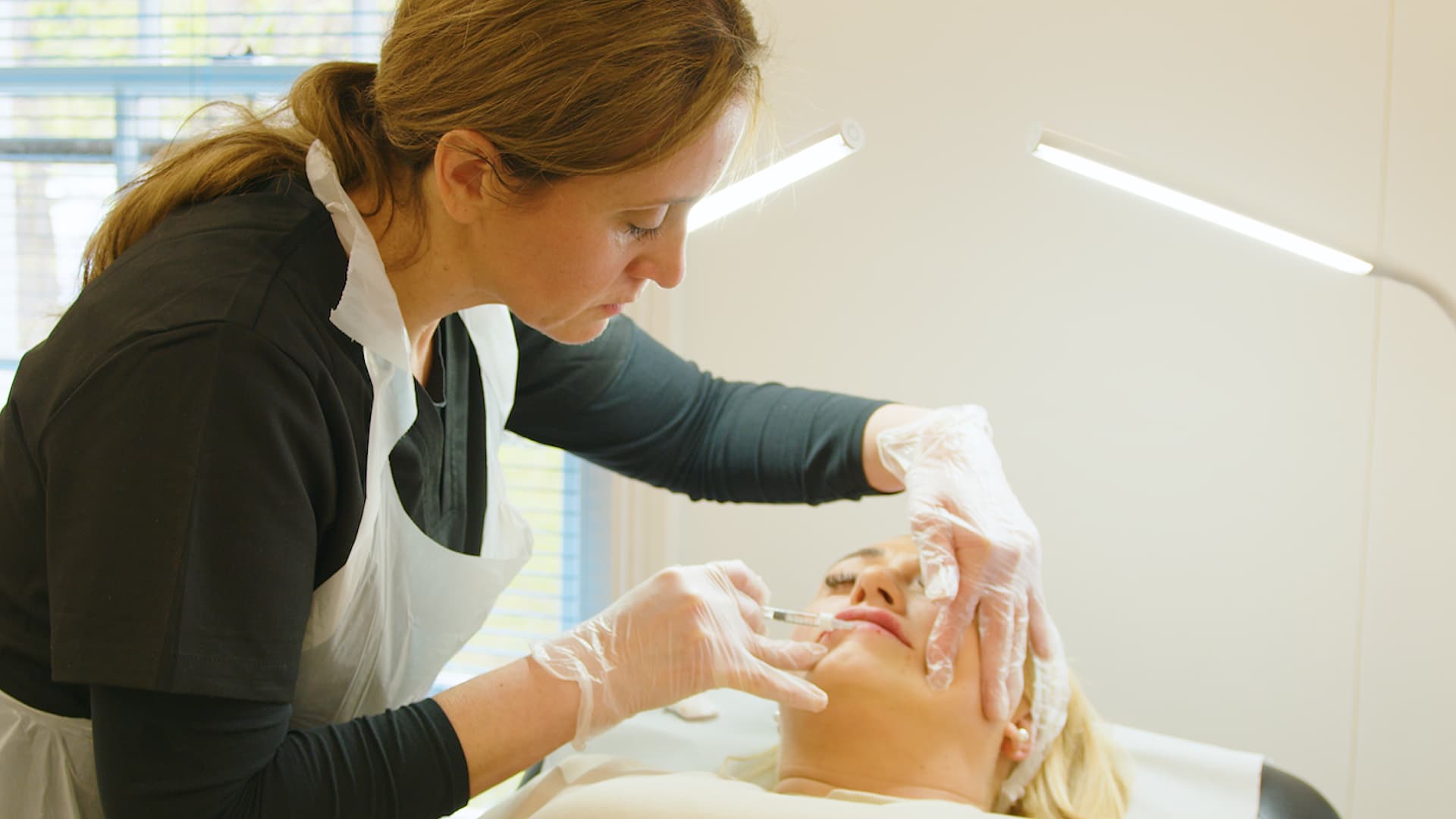
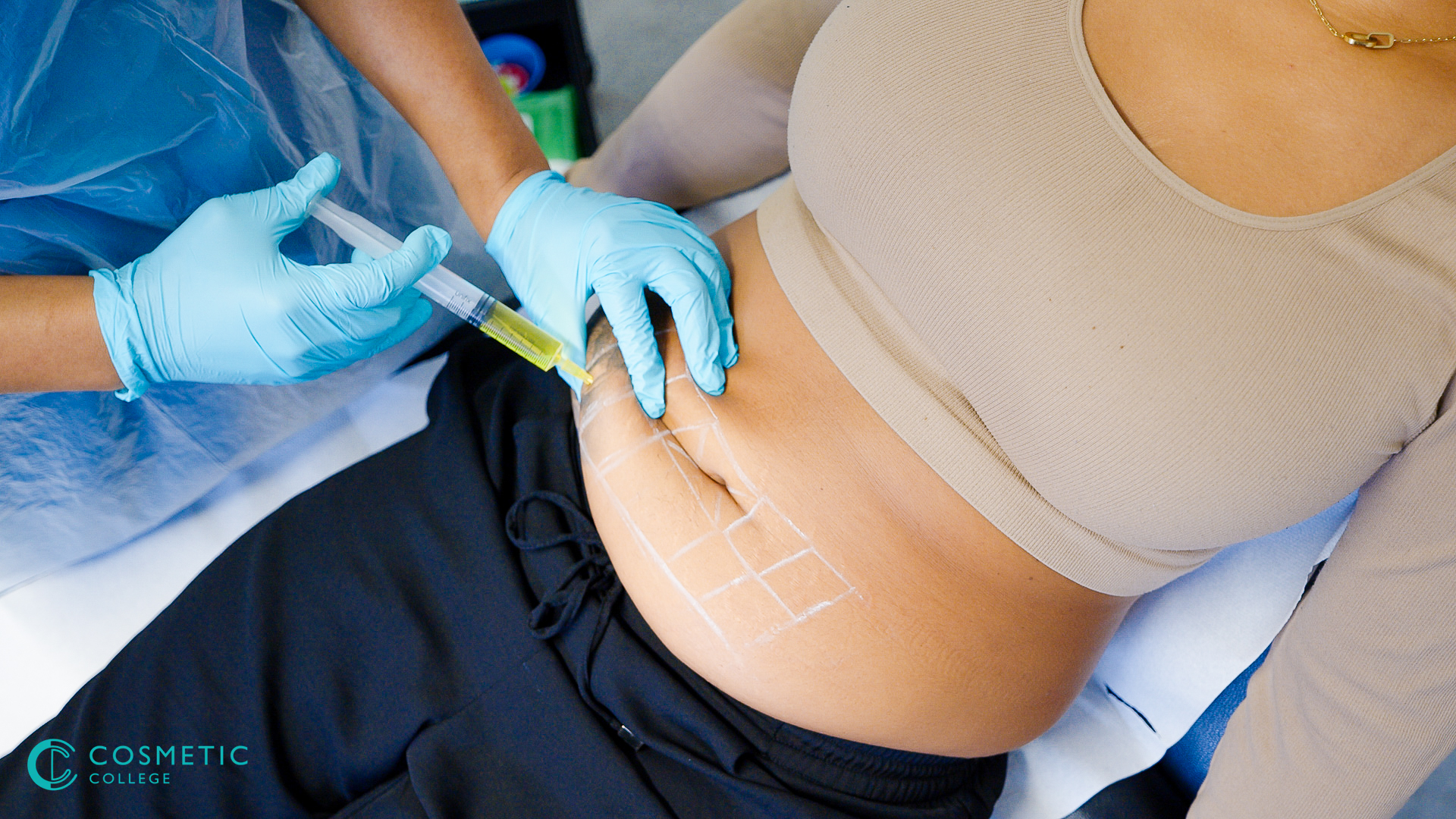
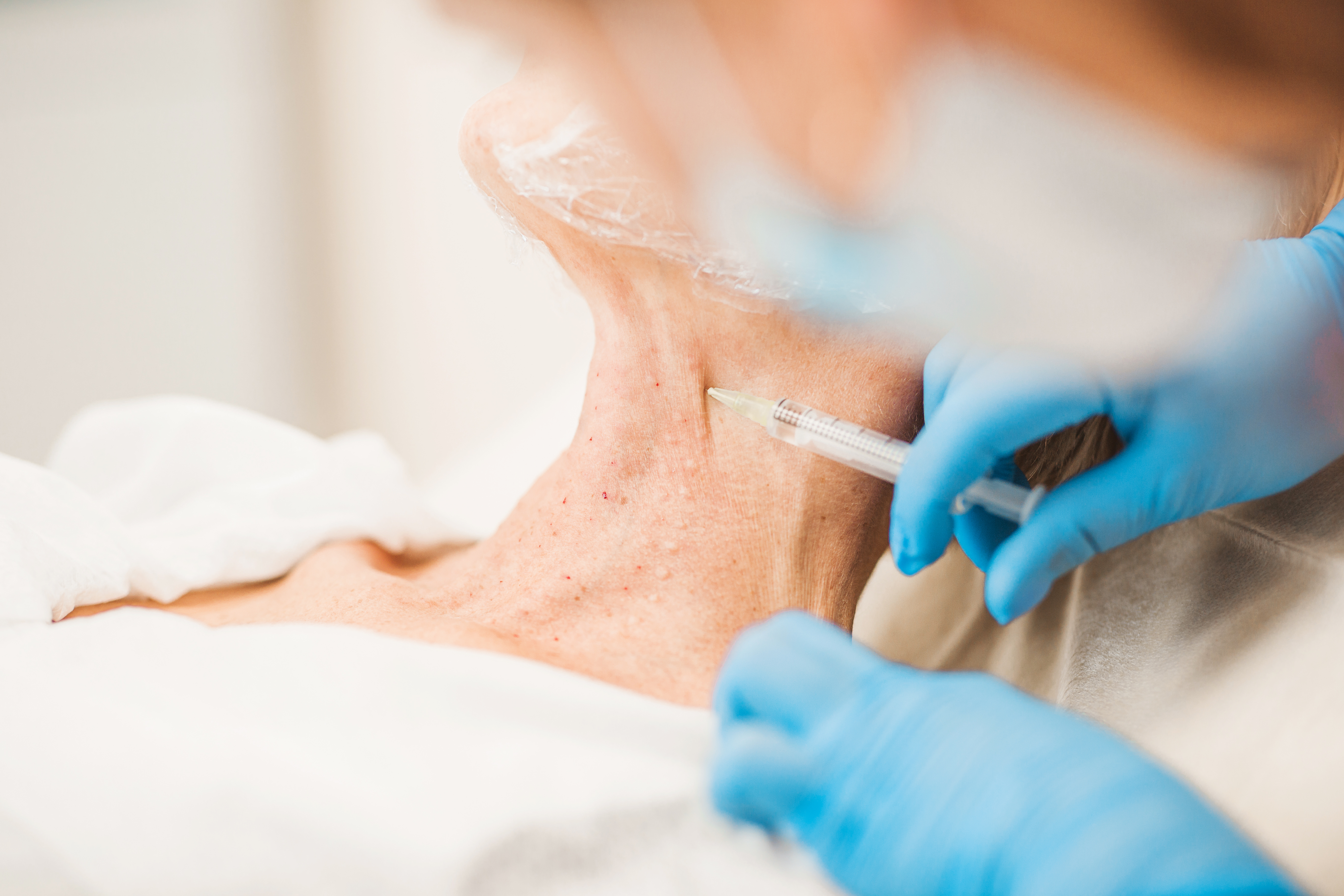
What it covers: Hands-on injection technique on live models, supervised by qualified trainers
| Component | Sessions | Hands-on practice | Assessment |
|---|---|---|---|
| Initial practical (Botulinum toxin technique) | 2 days (often weekends) | 6–10 live model injections, focus on forehead and crows feet | Trainer observation, feedback on needle positioning and product placement |
| Advanced practical (Filler technique) | 2 days | 8–12 live model injections, focus on lips and cheeks | Trainer observation, complication avoidance, product blending |
| Integrated assessment practical | 1–2 days | Observed live model treatments (full facial assessment + injection), complex cases | Formal assessment: Must demonstrate competency in safe injection, appropriate product selection, complication recognition |
| Consolidation practicals (optional but recommended) | 1–2 days | Repeat live model practice if needed; observed real-client treatments once qualified | Quality assurance before full independent practice launch |
| Phase 2 total | 4–8 days | 50–80 live model injections + assessments | Pass/fail practical assessment |
Scheduling note: Most practical days are booked 4–6 weeks apart to allow time for study, review, and practice between sessions. This extends overall timeline even though actual practical hours are short.
Phase 3: Portfolio and Case Studies (3–6 months, concurrent with practicals)
What it covers: Building evidence of competency through documented real client treatments
| Element | Evidence requirement | Timeline |
|---|---|---|
| Case study portfolio | Minimum 10–15 client cases documenting: pre-treatment consultation, photographs (before/after), treatment plan, products used, client outcome, follow-up | Built over 3–6 months of practice after initial assessment sign-off |
| Reflective commentary | 500–1,000 words per case reflecting on your decision-making, technique refinement, complication management | 1–2 weeks per case typically |
| Incident log | Documentation of any adverse events, how managed, client satisfaction | Ongoing (most students have 0–2 minor incidents across portfolio) |
| Final assessment review | Submission of portfolio to assessor; feedback; revision if needed | 2–4 weeks for assessor review + resubmission |
| Phase 3 total | 10–15 documented cases with portfolio | 3–6 months |
Pace note: This phase runs parallel to practicals and early independent practice. Most students complete cases faster once they're actively treating clients (typically 10–15 cases = 8–12 weeks of active practice).
Planning from your current stage
If you are early-stage (no qualifications), your full timeline is: Level 3 (4–6 weeks) + Level 4 (8–12 weeks) + Level 5 (8–12 weeks) + Level 7 (6–12 months) = 9–18 months total before independent Level 7 practice.
If you are already advanced (Level 5 qualified), you can enter Level 7 directly, taking 6–12 months depending on prior experience with advanced treatments.
If you are a medical professional with injectables experience, you may compress Level 7 to 4–6 months with evidence of prior supervised experience.
Use these pages to map your timeline:
How to reduce avoidable delays
Common delay reducers:
- Confirm eligibility before booking: Ensure you have Level 4 or 5 prerequisite (or equivalent medical background). Starting without prerequisites adds 4–6 months
- Lock practical dates early: Practical training days fill quickly (especially weekends). Booking 3–6 months in advance reduces scheduling delays
- Pre-complete theory modules: Start Phase 1 online theory while waiting for practical dates. Many students finish theory before practical starts, reducing total calendar time
- Follow assessment milestones weekly: Submit case studies and portfolio as you complete treatments, not in bulk at the end. This prevents last-minute backlogs
- Keep documentation and case evidence current: Photograph and document every client treatment immediately. Delays in documentation cause portfolio submission delays
Timeline-saving strategy: Complete Level 5 → start Level 7 Phase 1 theory immediately → lock practical dates 8–12 weeks out → practice Phase 1 while waiting → do practicals → build portfolio over next 3 months = total 6–9 months for some practitioners vs 12 months for others.
A short admissions planning call often saves weeks later. Book via Request a Callback.
Progression strategy matters more than speed
A rushed route without strong competency and safety depth can hurt long-term outcomes. Most high-performing practitioners choose structured progression that supports confidence and consistency.
If you need help selecting your starting level, use the course quiz.
Example timeline scenarios (planning only)
| Starting point | Timeline | Route | Notes |
|---|---|---|---|
| Beginner (no qualifications) | 12–18 months | Level 3 (4–6 wks) → Level 4 (8–12 wks) → Level 5 (8–12 wks) → Level 7 (6–12 mths) | Longest but safest path. Allows time to build competency and learn business between levels. Most practitioners complete Level 5 and earn for 3–6 months before starting Level 7 |
| Established beauty professional with Level 3–4 | 8–12 months | Level 5 (8–12 wks) → Level 7 (6–12 mths) | Moderate timeline. Assumes you're confident with basic procedures and ready to upskill to injectables |
| Advanced skin practitioner (Level 5 already qualified) | 6–12 months | Level 7 direct entry (6–12 mths) | Moderate to fast. You have foundational anatomical knowledge; Level 7 focuses on injectable-specific skills |
| Medical professional (nurse, doctor, medic with injection experience) | 4–6 months | Level 7 direct entry with prior experience evidence (4–6 mths) | Fastest route. Medical background and prior injection experience can compress timeline. Requires assessor approval |
| Established injectable practitioner (non-VTCT, seeking regulation) | 3–6 months | Level 7 via equivalency or accelerated route (case by case) | Varies. If you have years of experience but no regulated qualification, you may compress timeline with proven competency, but this must be assessed individually |
Important: These timelines assume consistent engagement and good attendance. Delays in practical scheduling, case study documentation, or assessment resubmissions can add 1–3 months each.
Your final timeline depends on:
- Attendance consistency (missing practical days adds 4–8 weeks)
- Practical scheduling availability (busy months may have longer waits)
- Assessment completion quality (first-pass vs resubmission can add 1–4 weeks)
- Your ability to generate portfolio cases (depends on client volume and booking consistency)
What Level 7 practical assessment involves
Understanding what you'll be assessed on helps you prepare and predict timeline:
| Assessment component | What assessor looks for | Typical format |
|---|---|---|
| Observed live model injection (forehead, crows feet) | Needle angle, depth control, product placement accuracy, safety (avoiding vessels/danger zones), client comfort and communication | 30–45 minute observed session with assessor notes |
| Observed live model injection (lips or cheeks - filler) | Correct plane of injection, appropriate product volume, blending technique, symmetry, aftercare communication | 30–45 minute observed session |
| Consultation and assessment | Can you conduct a thorough facial assessment, identify client concerns, set realistic expectations, document contraindications, discuss risks? | 15–30 minute documented consultation with assessor present |
| Viva voce (oral exam) | Can you explain injectable pharmacology, anatomy, complications, your decision-making? | 30–45 minute discussion with assessor asking targeted questions |
| Written assessment | Knowledge of pharmacology, anatomy, safety protocols, complication management | 1–2 hour written exam or case study questions |
| Portfolio review | 10–15 documented client cases showing: pre/post photos, client feedback, outcome documentation, incident reporting (if any) | Assessor reviews portfolio offline; usually 2–4 week turnaround |
| Reflective commentary | Can you demonstrate critical reflection on your practice, learning from outcomes, and continuous improvement? | Written reflections (500–1,000 words per case) |
Passing criteria: Most programmes require a pass grade across all components. One failed component usually means resubmission/reassessment (adds 2–6 weeks). However, pass rates are typically 85–90% first-time among committed learners.
How to cut 3 to 6 months of avoidable delay
- Confirm eligibility before paying deposits: Ensure you have completed Level 4 minimum, ideally Level 5. Starting without prerequisites adds 4–6 months to your total timeline
- Book practical dates early and protect them in your calendar: Practical training fills 8–12 weeks in advance. Lock weekend dates as soon as they open; flexibility on dates often saves 1–2 months
- Start Phase 1 online theory immediately: Begin studying pharmacology and anatomy before your first practical. This reduces timeline compression later
- Keep case and assessment documentation current every week: Don't batch-document at the end. Every treatment = immediate photo, form completion, and case notes. This prevents portfolio delays
- Pre-plan the next stage before finishing the current one: Book practicals while finishing theory. Plan portfolio timing while in practicals. Overlapping phases compresses overall timeline
- Submit portfolio cases as completed, not in bulk: Assessor can give feedback on early cases while you're still building portfolio, reducing final resubmission time
- Use admissions checkpoints each quarter: Check your progress quarterly and adjust pacing. Small delays catch early prevent 2–3 month slippages
Real timeline example:
- Week 1–12: Level 7 Phase 1 theory + lock practical dates (running parallel)
- Week 8–12: First practical session (Level 7 practical starts before theory finishes)
- Week 16–20: Second practical session
- Week 12–24: Build portfolio cases while practicals continue (overlap phases)
- Week 24–28: Submit portfolio for assessment
- Total: 28 weeks = 6.5 months (vs 12 months for sequential approach)
Most timeline overruns come from pauses between levels or delayed portfolio documentation, not course duration itself. Use Pathway to Aesthetics as your route map and align start windows with the training calendar.
FAQ
Can beginners complete VTCT Level 7 quickly? No. Beginners typically require staged VTCT progression through Levels 3, 4, and 5 before Level 7 readiness. See VTCT Level 3 Access to Aesthetics Requirements UK for entry-level options.
Does part-time VTCT Level 7 study increase duration? Yes, but it can improve completion quality for working professionals. Paired with the training calendar, part-time routes are often more sustainable.
What is the fastest safe way to complete the VTCT Level 7 route? Plan progression early, secure practical dates, stay consistent with assessments, and use Pathway to Aesthetics as your guide. See VTCT Pathway Planner 2026.
Should I complete VTCT Level 5 before Level 7 injectables? For many learners, Level 5 progression strengthens readiness for Level 7 injectables. See VTCT Level 5 vs Level 7 Injectables for detailed comparison.
Can I plan VTCT Level 7 dates before final enrolment? Yes, check the training calendar and confirm prerequisites with admissions via Request a Callback.
Where can I compare VTCT Level 7 pathways against lower levels? Use Pathway to Aesthetics and VTCT Training UK: Complete Guide.
Is a faster VTCT Level 7 route always better for earning potential? Not necessarily. Rushing through to qualify faster without building solid technique and confidence often results in: lower initial booking rates (clients sense lack of confidence), higher complication rates (which damage reputation and insurance), weaker client retention (less repeat bookings). Most successful Level 7 practitioners spend 6–9 months on Level 7 even if they could finish in 4 months, because building real competency pays back through stronger bookings and client loyalty. Steady progression usually outperforms rushed routes.
When should I book a VTCT Level 7 route-planning call? Before enrolment and again at each major progression milestone (before Level 7 Phase 1, before first practical, after practicals before portfolio submission). See How to Get Insurance for VTCT Aesthetic Treatments for insurance alignment planning and UK Aesthetics Salary Benchmark 2026 to understand your earning timeline.
What if I fail part of the Level 7 assessment? Most programmes allow reassessment. If you fail the practical, you typically retake it after 2–4 weeks of additional practice. If you fail the viva, you retake the oral exam after a week. Portfolio resubmissions usually take 2–4 weeks. First-time pass rate is typically 85–90%, so failure is uncommon. Plan an extra 4–8 weeks buffer if reassessment is needed, but don't plan for failure - focus on thorough preparation during Phase 1 and practicals.
Can I start Level 7 before finishing Level 5? Not typically. Most programmes require evidence of Level 4 completion minimum, and many recommend Level 5 completion first. Some programmes allow concurrent enrolment (Level 5 + Level 7 Phase 1 at same time), but this is demanding. Check with your provider; most recommend finishing Level 5 before Level 7 starts to avoid burnout.
Editorial Standards
Author
Cosmetic College Editorial Team
Aesthetic Education Editorial Team
Cosmetic College specialists and admissions advisers produce this content to help learners choose regulated progression routes and make safer, better-informed training decisions.
Review cycle
Published: 28 January 2026
Last reviewed: 28 January 2026
Reading time: 11 min
Sources and References
- VTCT coursescosmetic.college
- Pathway to Aestheticscosmetic.college
- Level 7 course detailscosmetic.college
- Request a Callbackcosmetic.college
- course quizcosmetic.college
- training calendarcosmetic.college
- VTCT Level 3 Access to Aesthetics Requirements UKcosmetic.college
- VTCT Pathway Planner 2026cosmetic.college
- VTCT Level 5 vs Level 7 Injectablescosmetic.college
- VTCT Training UK: Complete Guidecosmetic.college
- How to Get Insurance for VTCT Aesthetic Treatmentscosmetic.college
- UK Aesthetics Salary Benchmark 2026cosmetic.college